Baptism
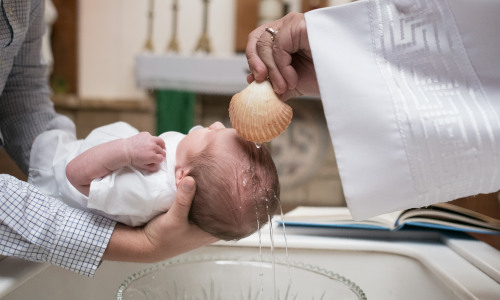 The sacrament of Baptism is the beginning of life—supernatural life. Because of original sin, we come into the world with a soul which is supernaturally dead. We come into the world with only the natural endowments of human nature. The supernatural life which is the result of God’s personal and intimate indwelling, is absent from the soul. Original sin is not, in the strict sense, a “blot” upon the soul. Indeed, original sin is not a “something” at all. It is the absence of something that should be there. It is a darkness where there ought to be light.
Jesus instituted the sacrament of Baptism to apply to each individual soul the atonement which He made on the Cross for original sin. Jesus will not force His gift upon us, the gift of supernatural life for which He paid. He holds the gift out to us hopefully, but each of us must freely accept it. We make that acceptance by receiving the sacrament of Baptism. When the sacrament of Baptism is administered, the spiritual vacuum which we call original sin disappears as God becomes present in the soul, and the soul is caught up into that sharing of God’s own life which we call sanctifying grace.
Confession
.jpg?1595428272) The means by which God forgives sins after baptism is confession: “If we confess our sins, he is faithful and just, and will forgive our sins and cleanse us from all unrighteousness” (1 John 1:9).
The means by which God forgives sins after baptism is confession: “If we confess our sins, he is faithful and just, and will forgive our sins and cleanse us from all unrighteousness” (1 John 1:9).
Minor or venial sins can be confessed directly to God, but for grave or mortal sins, which crush the spiritual life out of the soul, God has instituted a different means for obtaining forgiveness—the sacrament known popularly as confession, penance, or reconciliation. This sacrament is rooted in the mission God gave to Christ in his capacity as the Son of man on earth to go and forgive sins (see Matt. 9:6). Thus, the crowds who witnessed this new power “glorified God, who had given such authority to men” (Matt. 9:8; note the plural “men”). After his resurrection, Jesus passed on his mission to forgive sins to his ministers, telling them, “As the Father has sent me, even so I send you. . . . Receive the Holy Spirit. If you forgive the sins of any, they are forgiven; if you retain the sins of any, they are retained” (John 20:21–23).
Holy Communion
.jpg?1595428274) The true Body and Blood of Jesus Christ, who is really and substantially present under the appearances of bread and wine, in order to offer himself in the sacrifice of the Mass and to be received as spiritual food in Holy Communion. It is called Eucharist, or "thanksgiving," because at its institution at the Last Supper Christ "gave thanks," and by this fact it is the supreme object and act of Christian gratitude to God. Although the same name is used, the Eucharist is any one or all three aspects of one mystery, namely the Real Presence, the Sacrifice, and Communion. As Real Presence, the Eucharist is Christ in his abiding existence on earth today; as Sacrifice, it is Christ in his abiding action of High Priest, continuing now to communicate the graces he merited on Calvary; and as Communion, it is Christ coming to enlighten and strengthen the believer by nourishing his soul for eternal life.
The true Body and Blood of Jesus Christ, who is really and substantially present under the appearances of bread and wine, in order to offer himself in the sacrifice of the Mass and to be received as spiritual food in Holy Communion. It is called Eucharist, or "thanksgiving," because at its institution at the Last Supper Christ "gave thanks," and by this fact it is the supreme object and act of Christian gratitude to God. Although the same name is used, the Eucharist is any one or all three aspects of one mystery, namely the Real Presence, the Sacrifice, and Communion. As Real Presence, the Eucharist is Christ in his abiding existence on earth today; as Sacrifice, it is Christ in his abiding action of High Priest, continuing now to communicate the graces he merited on Calvary; and as Communion, it is Christ coming to enlighten and strengthen the believer by nourishing his soul for eternal life.
Confirmation
 There is a close relationship between the sacraments of Baptism and Confirmation. While Confirmation is a distinct and complete sacrament in its own right, its purpose is to perfect in us that which was begun in Baptism. We might say—in a sense—that we are baptized in order to be confirmed. We are born spiritually in the sacrament of Baptism. We become sharers in the divine life of the most Blessed Trinity. We begin to live a supernatural life. As we practice the virtues of faith and hope and love and as we unite with Christ in His Church in offering worship to God, we also grow in grace and goodness. But at this stage our spiritual life, like the life of a child, is largely self-centered. We tend to be preoccupied with the needs of our own soul, with the effort to “be good.” We cannot be wholly self-centered, of course—not if we understand what it means to be a member of Christ’s Mystical Body, and not if we understand the significance of the Mass. But in general our religious life does revolve around self.
Marriage
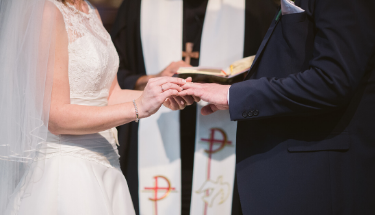 The Catholic Church teaches us to hold marriage as sacred. It is a gift from the hand of God, who created male and female in his image so that they may become one body. The vision of marriage for the Catholic Church is deeply rooted in the Scripture. In marriage, the love between a man and a woman is blessed by God. Marriage is a union in faith and a response to God’s call to holiness. The couple becomes the symbol of God’s love on earth. Matrimony comes from the Latin word maritare, meaning, “To wed, marry, and give in marriage.” It refers to the contract made by the couple¬ – a mutual alliance they enter into when they made the vow to support each other and be together for life. According to the Catechism of the Council of Trent,”marriage is a conjugal union between a man and a woman, both in legal status, in which they establish a perpetual and indissoluble union of lives. There are two goals in this union – procreation and education of the offspring and the mutual support of the spouses." This definition applies to two types of marriages, the one between non-baptized person and the one between two baptized persons. There former is made according to Natural Law while the latter is the marriage according to the Catholic Church.
Holy Orders
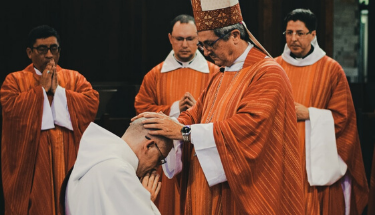 The sacrament of holy orders in the Catholic Church includes three orders: bishop, priest, and deacon. In the phrase "holy orders", the word "holy" simply means "set apart for some purpose." The word "order" designates an established civil body or corporation with a hierarchy, and ordination means legal incorporation into an order. In context, therefore, a group with a hierarchical structure that is set apart for ministry in the Church. For Catholics, the church views typically that in the last year of seminary training a man will be ordained to the "transitional diaconate." This distinguishes men bound for priesthood from those who have entered the "permanent diaconate" and do not intend to seek ordination as a priest. Deacons, whether transitional or permanent, receive faculties to preach, to perform baptisms, and to witness marriages (either assisting the priest at the Mass, or officiating at a wedding not involving a Mass). They may assist at services where Holy Communion is given, such as the Mass, and they are considered the ordinary dispenser of the Precious Blood (the wine) when Communion is given in both types and a deacon is present, but they may not celebrate the Mass. They may officiate at a funeral service not involving a Mass, including a visitation (wake) or the graveside service at burial. After six months or more as a transitional deacon, a man will be ordained to the priesthood. Priests are able to preach, perform baptisms, witness marriages, hear confessions and give absolutions, anoint the sick, and celebrate the Eucharist or the Mass. Some priests are later chosen to be bishops; bishops may ordain priests, deacons, and bishops.
Anointing of the Sick
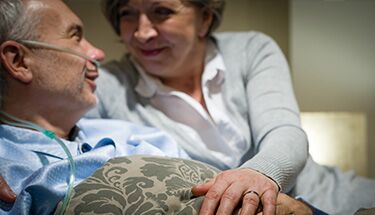 The anointing of the sick is administered to bring spiritual and even physical strength during an illness, especially near the time of death. It is most likely one of the last sacraments one will receive. A sacrament is an outward sign established by Jesus Christ to confer inward grace. In more basic terms, it is a rite that is performed to convey God’s grace to the recipient, through the power of the Holy Spirit.